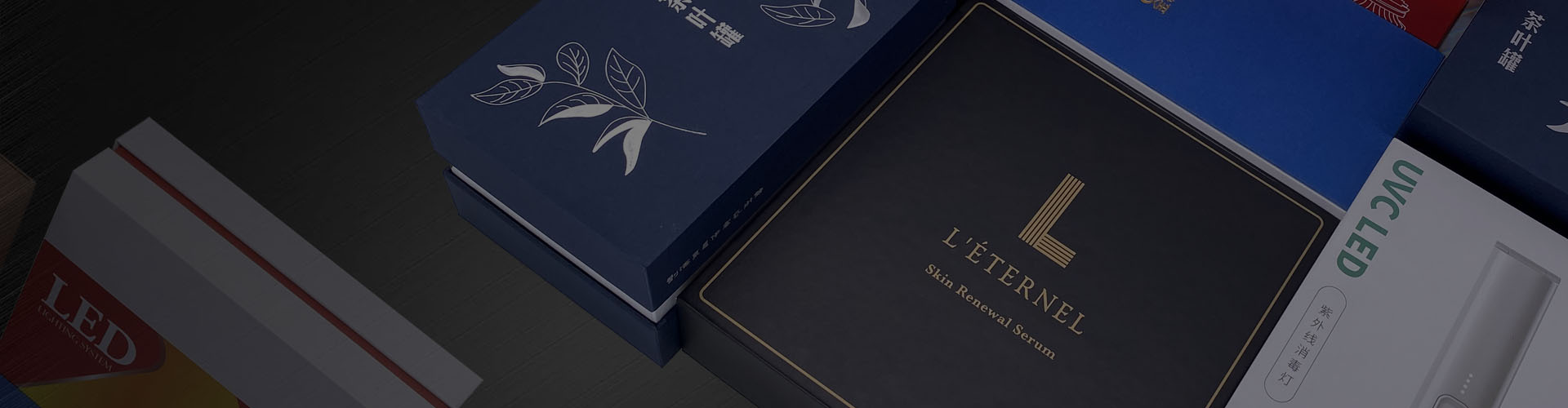
The commonly used definition of packaging box refers to folding cartons and micro-corrugated cartons made of two materials: cardboard and micro-corrugated board.
There are generally several forms of packaging box printing: (1) Color box: including corrugated color box and non-corrugated color box; (2) Ordinary brown corrugated box: commonly used are 3-layer corrugated box and 5-layer corrugated box, which need to be sealed with tape after packaging; (3) White box: including corrugated (3-layer or 5-layer) white box and non-corrugated white box, which need to be sealed with tape after packaging; (4) Display box: mainly including colored display box, display box with PVC cover, etc.; (5) Gift box: generally used for packaging jewelry, stationery, and other products.
Common packaging materials include the following: (1) white paper types: regular white paper, copy paper, crepe paper; (2) bubble wrap/polyfoam/sponge/pearl wool; (3) paper boxes: white boxes, brown boxes, color boxes.
Although the primary concern for product packaging boxes is to protect the goods inside, the exquisite appearance of the packaging box is also a must for manufacturers to consider. Furthermore, factors such as the cost and economy of packaging materials also need to be taken into account. Therefore, when selecting the raw materials for packaging boxes, we should pay attention to several points:
(1) Equality: The quality of a product itself should match its outer packaging. For example, it is obviously not appropriate to use a very luxurious packaging box for a product priced at a few yuan. Conversely, if you use a paper box to package a high-end jewelry priced at thousands of yuan, it is equally inappropriate. Therefore, the selection of packaging box materials should also be differentiated according to the grade of the packaged items, including high-end, mid-range, and low-end. For some high-end electronic products, due to their high price and vulnerability to damage, it is necessary to use packaging materials with superior performance to ensure product safety. Jewelry, imported goods, and cosmetics are generally used to satisfy consumers' vanity, so high-end packaging materials are also employed. For mid-range packaging products, economic applicability is mostly considered, and the packaging materials are generally consistent with the products themselves. For some low-end products, which often have large sales volumes, they are mainly affordable types, such as batteries, toothpaste, and toothbrushes.
(2) Adaptability: When transporting products, we also need to consider that the packaging materials can adapt to the transportation conditions. Especially for some food products, factors such as weather, climate, the length of the journey, and the mode of transportation need to be paid special attention to. There are significant temperature differences in different regions' climates, which also requires manufacturers to be cautious when selecting packaging materials. In addition, different modes of transportation such as airplanes, trains, ships, and cars have different requirements for packaging materials. Therefore, manufacturers must understand that they need to choose packaging materials according to the desired mode of transportation.
(3) Aesthetics: As society progresses, consumers' aesthetic standards are becoming increasingly high. Consequently, their expectations for the appearance of printed packaging products have also risen. In fact, to determine whether a product's packaging is aesthetically pleasing, there's no need to seek the judgment of an art expert. Simply looking at its sales volume will suffice. Therefore, the aesthetics of a packaging box don't merely refer to artistic design. Instead, it hinges on whether the product packaging you design appeals to consumers. Only by understanding consumers' tastes and psychology can you create packaging boxes that satisfy them, thereby boosting product sales.